
What thatch is, and when it becomes a problem
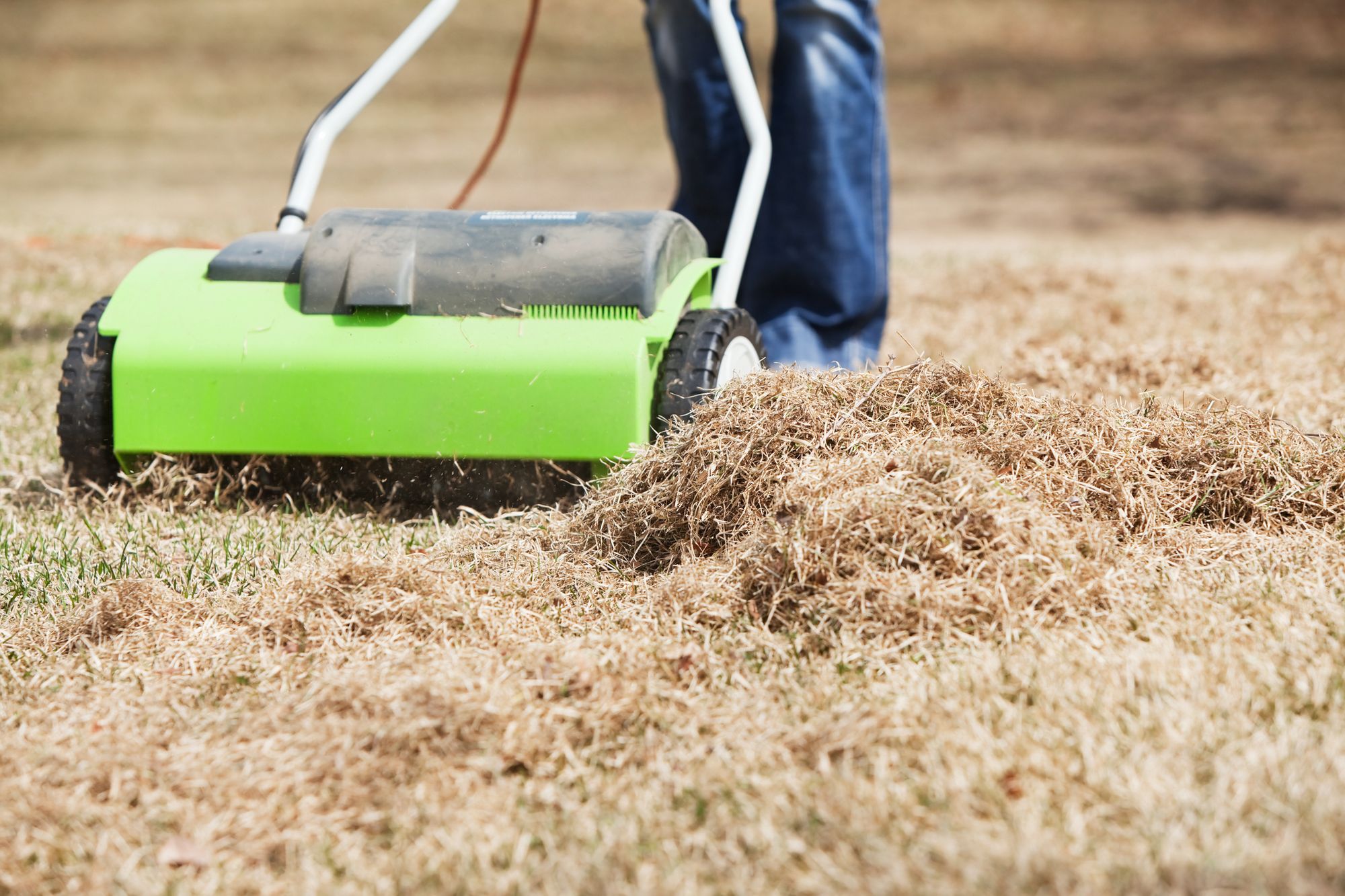
Thatch is the layer of dead and dying grass stems, roots and debris that builds up between the green blades and the soil. A thin layer, about half an inch, is actually good. It insulates the lawn against temperature swings and adds cushion.
Once thatch gets thicker than that, it starts working against you. Wet thatch holds water and blocks oxygen from the roots, roots that grow up into the thatch dry out in summer, and mower wheels sink in so the cut height drops and the lawn looks scalped. Thick thatch is also a perfect home for the fungi and insects behind common lawn diseases.
How we dethatch
We mow the lawn short, then run power rakes across it to pull the dead material up to the surface. On heavy thatch we make a second pass in a different direction. Everything we pull up is cleaned up, hauled away and disposed of, so you aren’t left with piles of debris.
Thatching opens the lawn up, which makes it the perfect time to aerate, overseed and fertilize. Most of our Whatcom County customers do it in spring or early fall, when the grass can recover quickly.
Signs your lawn needs it
The lawn feels spongy underfoot, water puddles or runs off instead of soaking in, grass looks thin even though you water and feed it, or you can see a brown matted layer when you part the blades. Not sure? We’ll take a look during your free estimate.
Year-round care
A healthy Whatcom lawn, every season.
Our crews work through every season of the Northwest year so your property never falls behind.




FAQ
Frequently asked questions
Don’t see your question? Call the office at (360) 354-5124 and we’ll help.
Related services
Pair it with these services
Service area
Proudly serving all of Whatcom County.
Our crews work in Bellingham, Ferndale, Lynden, Blaine and the communities in between, for homeowners, HOAs and commercial properties.